Bedroom Design · Materials & Craft
Wood or Upholstery? How Cisco Home and Maple Corner Woodworks Shape Bed Design
A bed frame sets the visual register of a bedroom long before the sheets are turned down. Cisco Home’s upholstered, customizable designs bring softness and expressive fabric into the room; Maple Corner Woodworks’ handcrafted hardwood frames let grain, joinery, and silhouette take the lead. The difference is more than a matter of taste: it changes how a bed feels to live with, how it works with surrounding furniture, and how its character may evolve over time.
Understanding the materials and construction behind each approach can make the choice clearer. Think of the comparison not as a contest between plush and polished, but as a decision about texture, maintenance, proportion, and the kind of presence you want your bed to have.
The bed as the room’s defining line
Bedrooms are intimate spaces, but their design is built around a substantial object. A bed occupies considerable floor area and often provides the first focal point on entering the room. Its headboard establishes a visual horizon; its frame determines how much of the floor remains visible; its materials set the mood for everything from bedside lighting to rugs and window treatments.
That is why the wood-versus-upholstery question can reshape an entire decorating plan. An upholstered headboard may make a room feel layered, tactile, and gently enveloping. A solid-wood frame can bring an architectural clarity that feels grounded and composed. Neither approach guarantees a particular style: upholstery can be spare and modern, while wood can be sculptural or richly traditional. The decisive details are the design’s outline, finish, scale, and relationship to the rest of the room.
Cisco Home and Maple Corner Woodworks offer useful examples of two distinct design languages. Cisco Home’s bed frames include customizable upholstered forms and designs that can be tailored through fabric choices. Maple Corner Woodworks centers its beds on solid hardwood, handcrafted construction, and natural finishes. Each makes the bed a statement about material, but the statement is expressed in a different voice.
Cisco Home: softness, fabric, and a more tailored silhouette
Upholstery changes the way a bed reads. Instead of presenting a frame as an exposed structure, fabric wraps it in color and texture. The result can feel softer against the room’s other hard surfaces—floorboards, case goods, painted walls—and can make the headboard a comfortable-looking backdrop for reading or sitting up in bed.
Several Cisco Home designs illustrate how varied an upholstered bed can be. The Finn Bed Frame pairs a tufted headboard with the option to select a fabric, allowing the finish to be adjusted to the room rather than treated as a fixed detail. The O’Hara Bed is also described as customizable in fabric, with a more stately presence. The Emma Bed takes another approach, with a headboard that wraps around at the sides, creating a more enclosing profile. These examples show that “upholstered bed” is not a single look: it can be crisp, rounded, formal, or relaxed.
Fabric gives a designer or homeowner a broad palette to work with. A quiet neutral can recede into a room, letting bedding and art provide the color. A deeper shade can give the bed a deliberate sense of weight. Texture matters just as much as hue: a smooth, tightly woven covering will create a different impression from a visibly textured or plush fabric. Customization makes it easier to coordinate a bed with existing choices, though it also asks for more consideration. The fabric should suit the room’s light, the bedding’s pattern, and the daily habits of the people using the space.
Upholstery can also introduce practical questions. It is worth asking how the fabric should be cleaned, whether it is removable or fixed, and how it may respond to regular contact. Dust, pets, children, and the habit of leaning against the headboard are all part of real bedroom life. The most appealing textile is not automatically the most suitable one; care instructions and the intended use of the bed deserve attention alongside its appearance.
Maple Corner Woodworks: grain, joinery, and lasting form
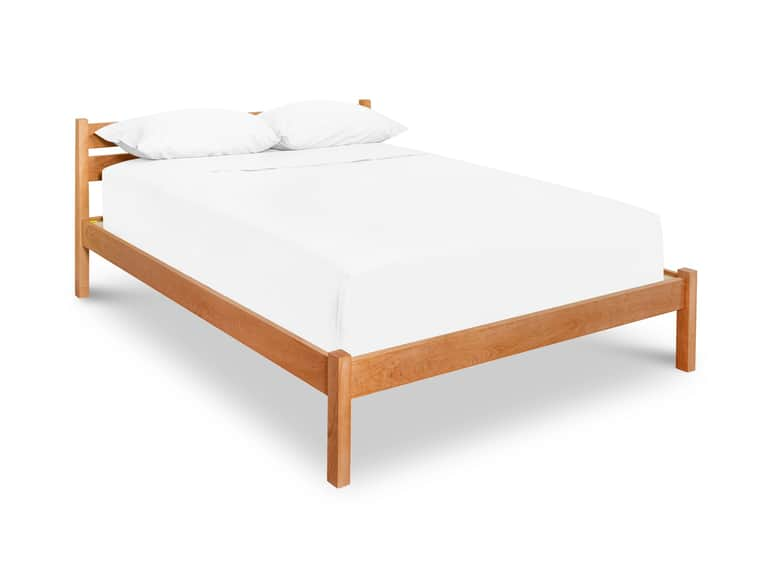
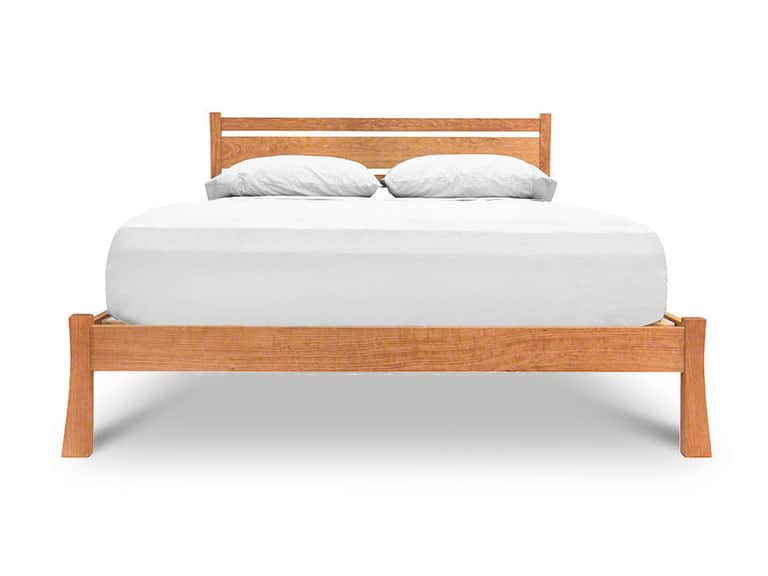
Where upholstery adds a layer, solid wood makes its material visible. Maple Corner Woodworks’ beds are handcrafted in Vermont from hardwoods such as cherry, maple, and walnut, with natural, hand-rubbed finishes described for a number of designs. The grain remains part of the design rather than being concealed beneath a covering. Small differences in color and pattern can give the frame a character that feels individual without relying on ornament.
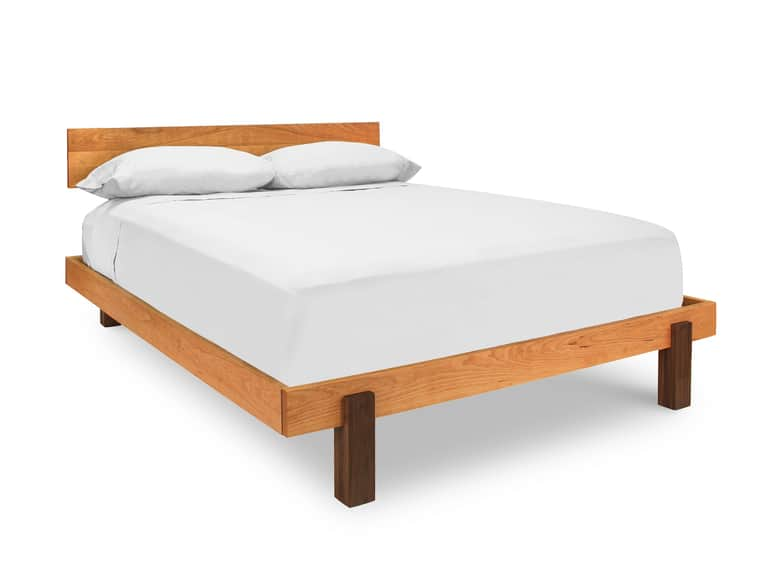
The construction details are central to the appeal. Many Maple Corner Woodworks beds use a platform design, so a box spring is not required, although some models can be made for a traditional mattress-and-box-spring arrangement. The descriptions also note wide wooden slats, connections between the side rails and the head and footboards, and reinforced support for larger sizes. Those details matter because the frame is not merely a decorative border: it must support a mattress reliably and fit the way a room is used.
Designs such as the Harvestmoon Panel Bed and Canterbury Shaker Panel Bed demonstrate the range available within a hardwood-focused approach. The panel bed gives the wood a broader visual field, while Shaker-inspired lines emphasize proportion and restraint. Other forms, such as a four-poster design or a platform bed with a low footboard, change the room’s silhouette without abandoning the material’s natural character.
Natural wood also changes with its surroundings. Cherry, maple, and walnut have distinct tones and grain patterns, so the same outline can feel quite different depending on the chosen species and finish. Wood can sit comfortably beside linen, wool, cotton, painted furniture, or metal accents; it need not make a bedroom feel rustic. A clean profile and restrained finish can read as contemporary, while a more pronounced panel or post can lend the room a traditional note.
For shoppers comparing hardwood frames, the finish deserves as much thought as the species. A hand-rubbed oil finish, for example, is not identical in appearance or care to a painted or highly reflective surface. Ask what routine maintenance is recommended, how the finish may respond to everyday marks, and whether the visible sample represents the tone you can expect in your own light. A natural material has variation; that variation is part of its appeal, but it should be understood before selecting a frame.
A comparison of feel, care, and visual impact
Choosing between wood and upholstery becomes easier when the comparison is broken into practical questions. The frame should suit the room visually, but it should also fit the routines that take place there. Consider how you sit, how you make the bed, what touches the headboard, and how much maintenance you are comfortable undertaking.
- Texture: Upholstery adds a soft, tactile surface and can temper a room with many hard materials. Wood brings visible grain and a more defined, structural character.
- Color: Fabric offers a wide range of shades and patterns. Wood’s color is closely tied to its species and finish, with the grain remaining part of the palette.
- Care: Upholstered frames call for attention to fabric-specific cleaning guidance. Wood frames generally require care appropriate to their finish and should be protected from unsuitable cleaners or excess moisture.
- Construction: With either material, look beyond the headboard. Ask about the support system, frame connections, mattress compatibility, size, and assembly requirements.
- Room presence: A fabric-covered frame can soften the bed’s outline; a wood frame makes its structure more apparent. The effect depends on profile and scale as much as material.
- Personalization: Fabric choice can make an upholstered bed feel closely coordinated with a scheme. Wood choice and finish let a hardwood frame express variation in tone and grain.
These are tendencies, not rules. A low, simple upholstered bed may feel visually quiet, while an elaborate wooden frame can become the room’s most decorative feature. Always evaluate the actual shape and dimensions rather than assuming that one material will automatically produce one style.
Choosing a profile for your bedroom
Before settling on a material, look closely at the room itself. Measure the available space, including the path around the bed, and consider the height of windows, bedside tables, and any existing headboard wall. A tall headboard can become a striking focal point, but it may compete with architectural details or feel imposing in a compact room. A lower frame can create a more open impression and leave more wall visible.
For a room that needs softness, upholstered Cisco Home designs may be a natural direction to explore. A fabric headboard can complement layered bedding and curtains, or introduce a subtle shift in texture without adding another hard surface. If you prefer a coordinated look, fabric selection gives you a way to connect the bed to an existing palette. The key is to choose a covering that feels good visually and is practical for how the bed will be used.
If you are drawn to visible craftsmanship and the depth of natural grain, Maple Corner Woodworks’ hardwood approach may feel more at home. A solid-wood frame can provide a steady visual anchor, particularly when paired with simple bedding and a restrained set of accessories. It can also work in a layered room: wood does not need to stand alone, and a quilt, woven throw, or upholstered bench can bring in softness around it.
Where a room needs flexibility, it can help to decide which elements you want to keep visually quiet. If the bedding is patterned, a simple frame may bring balance. If the linens are calm and nearly tonal, a distinctive headboard or expressive grain can add interest without crowding the scene. The bed is the largest piece, but it does not have to be the loudest one.
Construction questions worth asking
Beautiful material is only part of a well-considered bed. A frame should be compatible with the mattress and foundation you plan to use, and its support arrangement should match the manufacturer’s requirements. Platform beds may eliminate the need for a box spring, but confirm the intended setup for the particular model. If you already own a mattress, check its dimensions and the frame’s mattress space rather than relying on the size name alone.
Ask how the frame is supported and assembled. Slat spacing, center support, rail connections, and size-specific reinforcement can all influence how a bed functions. If the bed is made to order, confirm the current crafting timeline, available wood or fabric choices, and any customization limits. Product descriptions can provide a useful starting point, but detailed questions help prevent surprises when the frame arrives.
For upholstery, request clear care guidance and confirm which parts are covered. For hardwood, ask about the finish and how to maintain it. If environmental attributes are important to you, look for precise information about materials and certifications rather than assuming that a natural appearance alone answers every question. Good design is not only about an attractive first impression; it is about understanding what you are bringing into the room.
Related hardwood forms to explore
For readers drawn to a solid-wood platform silhouette, the Horizon Platform Bed offers clean Arts and Crafts styling in solid cherry, maple, or walnut, with an eco-friendly oil finish. It is made to order in Vermont by Vermont Furniture Designs. The Vergennes Platform Bed takes a straightforward contemporary approach to solid hardwood, with a natural hand-rubbed oil finish and the same choice of cherry, maple, or walnut. These are separate designs and makers from Maple Corner Woodworks, but they offer useful points of comparison for anyone considering the broader appeal of natural-wood beds.
For a different silhouette, the Modern American Platform Bed pairs solid hardwood construction with smooth lines influenced by Art Deco design. Its profile illustrates how the material itself does not dictate whether a bed feels traditional or modern; outline, proportion, and finish do much of that work.
A bedroom built around your own preferences
There is no universal winner in the choice between upholstered and wooden bed frames. Cisco Home’s upholstered designs make fabric and softness central to the experience, with customization that can bring a bed into close dialogue with a room’s colors and textures. Maple Corner Woodworks places emphasis on solid hardwood, hand-finished surfaces, and construction details that keep the material in view.
Start with the feeling you want to create. Do you want the bed to look inviting and upholstered, or composed and grounded in natural grain? Then consider the everyday questions: how much fabric care you are willing to manage, which finishes appeal to you, what kind of support system your mattress needs, and how the frame’s scale will work in the room. Those answers are more useful than choosing a material simply because it is fashionable.
The most successful bed frame is one that makes sense both in the photograph and in daily life. When proportion, construction, material, and maintenance align with your preferences, the bedroom feels less like a collection of furnishings and more like a considered place to rest. Whether the final expression is soft with fabric or defined by hardwood, the best choice is the one whose character you will be glad to live with.
At a glance: which direction feels right?
- Consider an upholstered Cisco Home bed if you value fabric choices, a softer headboard presence, or a frame that can coordinate closely with a chosen color scheme.
- Explore Maple Corner Woodworks if you are drawn to handcrafted hardwood, visible grain, natural finishes, and platform-bed construction.
- Compare particular frames by dimensions, mattress compatibility, support, assembly, finish or fabric care, and the specific details available for the size you need.
- Let your room’s proportions and daily routines guide the decision as much as its aesthetic.